

Financiar
Un sistem de contabilitate în partidă dublă integrat în cabinet. Timpul devine factură, factura devine creanță, o încasare devine numerar și fiecare dintre aceste operațiuni se înregistrează automat în registrul general. Contabilitatea dumneavoastră, datoria restantă, poziția fiscală și șaisprezece rapoarte citesc toate aceleași înregistrări. Această pagină este atât harta modulului, cât și regulile după care funcționează.
Ce este modulul
Financial în bara laterală stângă. Înregistrează munca pe care o face cabinetul, transformă acea muncă în facturi, înregistrează sumele primite și cheltuielile efectuate și păstrează banii clienților separat de fondurile proprii ale cabinetului. Gestionează mai multe valute simultan, păstrează un istoric al ratelor de schimb cu dată, astfel încât o lună închisă să rămână închisă, și distribuie onorariile care acoperă o perioadă pe lunile cărora le aparțin.
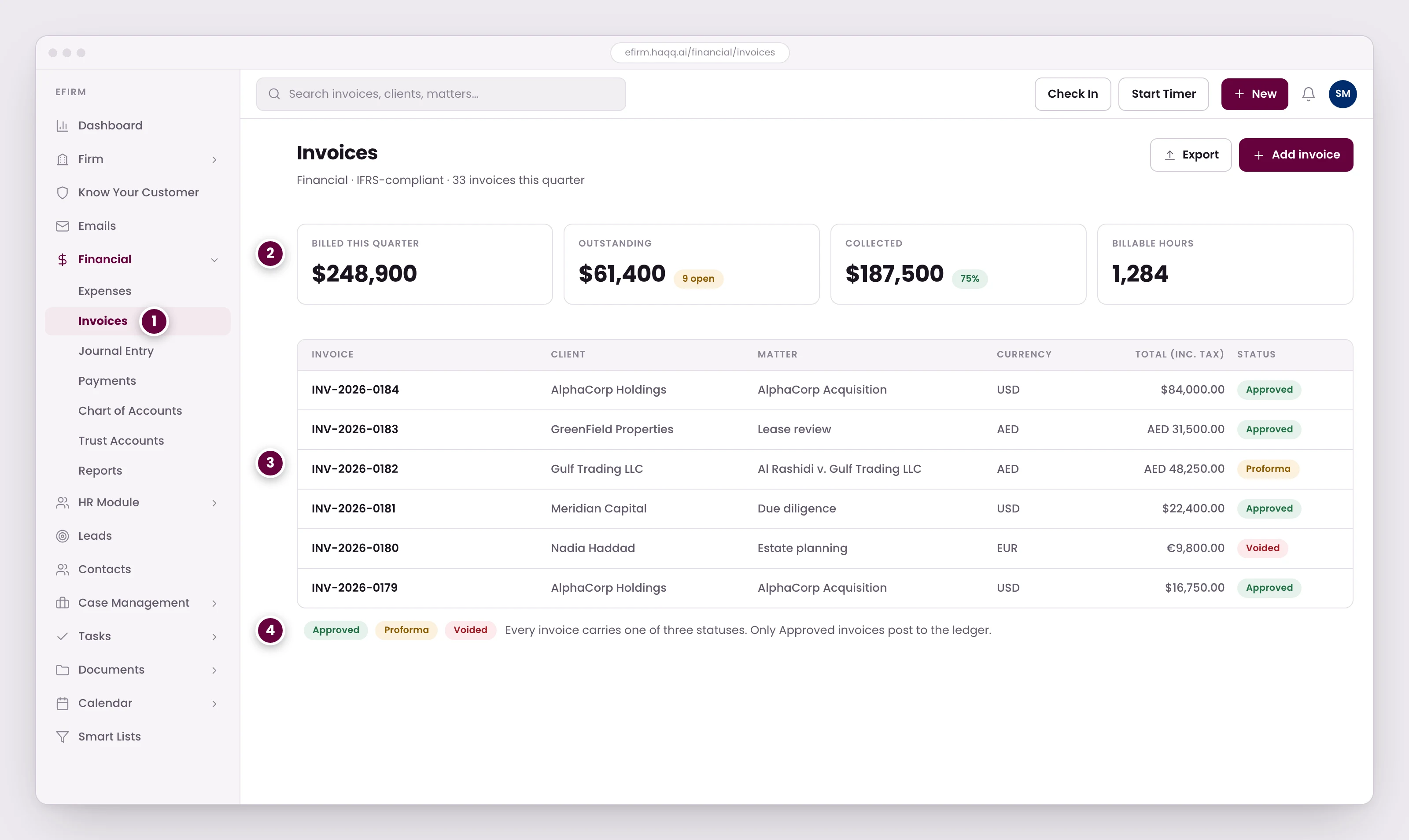
- Facturile se află în modulul Financiar, lângă Cheltuieli, Plăți și Planul de Conturi.
- Totalurile trimestriale se actualizează pe măsură ce facturile sunt emise și plătite. Orele facturabile provin direct din timpul înregistrat.
- Fiecare factură este asociată unui client și unui dosar, astfel încât venitul este întotdeauna atribuibil muncii care l-a generat.
- Trei stări. Doar facturile Aprobate se înregistrează în registru. Proforma este o ciornă, Anulată este anulată, dar păstrată în evidență.
Unde se află totul
Grupul Financial din bara laterală este o listă fixă de opt intrări. Șapte sunt ecrane de registru; a opta este un link către pontajul cabinetului, care nu este o pagină financiară, dar este plasat la sfârșitul grupului, deoarece orele facturabile sunt punctul de plecare pentru majoritatea facturilor.
| Ecran | Cale | La ce folosește | Cine îl folosește |
|---|---|---|---|
| Invoices | /financial/invoices | Facturile pe care cabinetul le trimite unui client, construite pe baza înregistrărilor de timp legate și a cheltuielilor facturabile. Singurul loc în care apare suma datorată cabinetului. | Personalul de facturare |
| Expenses | /financial/expenses | Banii cheltuiți de cabinet, marcați opțional ca facturabili către un client și un dosar. Alimentează atât partea de costuri a contabilității, cât și liniile refacturabile de pe o factură. | Oricine cheltuiește bani din partea cabinetului |
| Payments | /financial/payments | Bani care se mișcă efectiv, înregistrați ca o încasare. Patru moduri, enumerate mai jos la Payments și încasări. | Personal de facturare și casieri |
| Journal Entry | /financial/journal-entry | O înregistrare contabilă introdusă direct în registrul jurnal, pentru orice nu produc celelalte ecrane. | Doar contabili |
| Plan de conturi | /financial/chart-of-accounts | Arborele de conturi în care ajunge fiecare articol contabil. Se configurează o singură dată, apoi se lasă în mare parte neschimbat. | Contabili |
| Trust Accounts | /financial/trust-accounts | Sumele clienților pe care cabinetul le deține, dar care nu îi aparțin, evidențiate pentru fiecare client cu un sold și un sold minim. | Personal de facturare și conformitate |
| Reports | /financial/reports | Cele șaisprezece rapoarte numai în citire enumerate mai jos. Nu fac nicio înregistrare și nu modifică nimic. | Parteneri, contabili, oricine răspunde la o întrebare financiară |
| Timesheet | /firm/time-sheet | Evidența orelor lucrate la nivelul cabinetului. Un link extern modulului, nu o pagină din cadrul acestuia. | Avocați |
Configurarea nu se află în mod deliberat în acel meniu. Un șablon și o rată de schimb sunt setări, nu înregistrări contabile, așa că se găsesc în Setări, în cadrul grupului financiar propriu. Aici trebuie să mergeți când o pagină de mai sus nu vă permite să salvați sau să aprobați.
| Ecran | Cale | La ce folosește |
|---|---|---|
| Invoicing | /settings/financial/invoicing | Logo-ul facturii, codul de înregistrare fiscală al cabinetului și cota sa de taxă implicită. |
| Invoice Templates | /settings/financial/invoice-templates | Constructorul drag-and-drop pentru aspectul facturii tipărite. |
| Șabloane de chitanță | /settings/financial/receipt-templates | Același constructor, pentru chitanțele de plată tipărite. |
| Monede | /settings/financial/currencies | Monedele în care cabinetul tranzacționează și istoricul datat al fiecărei rate de schimb. Deschiderea uneia arată cronologia ratei, inclusiv ratele blocate și cele înlocuite; adăugarea unei rate necesită întotdeauna o dată. |
| Profile de facturare | /settings/financial/billing-profiles | Seturi reutilizabile de detalii de facturare sub care cabinetul emite facturi. O factură nu poate fi salvată fără unul. |
Ce vede un client
Tot ce este mai sus este din partea cabinetului, dar clientul are propria sa vizualizare. Un contact invitat în portalul clientului se autentifică și vede o pagină financiară care listează fiecare factură pe care cabinetul a emis-o către acesta (număr, titlu, stare, datele facturii și scadentă, total, plătit și rămas, în moneda facturii) și poate deschide oricare dintre ele integral: articole, taxe, chitanțele înregistrate pentru aceasta și notele și termenii pe care factura le conține.
Este doar pentru citire și este restrâns. Un client poate vizualiza, căuta, sorta și imprima; nu poate edita, anula, plăti sau șterge nimic și vede doar propriile facturi. Un ID de factură al altui client returnează „negăsit” mai degrabă decât facturarea altcuiva. Nimic altceva din Financiar nu este expus: nicio situație, niciun sold fiduciar, niciun registru.
Ciclul de viață al banilor
Aceasta este coloana vertebrală a modulului. Tot ce se află pe această pagină se bazează pe aceasta, deci merită citit integral o dată.
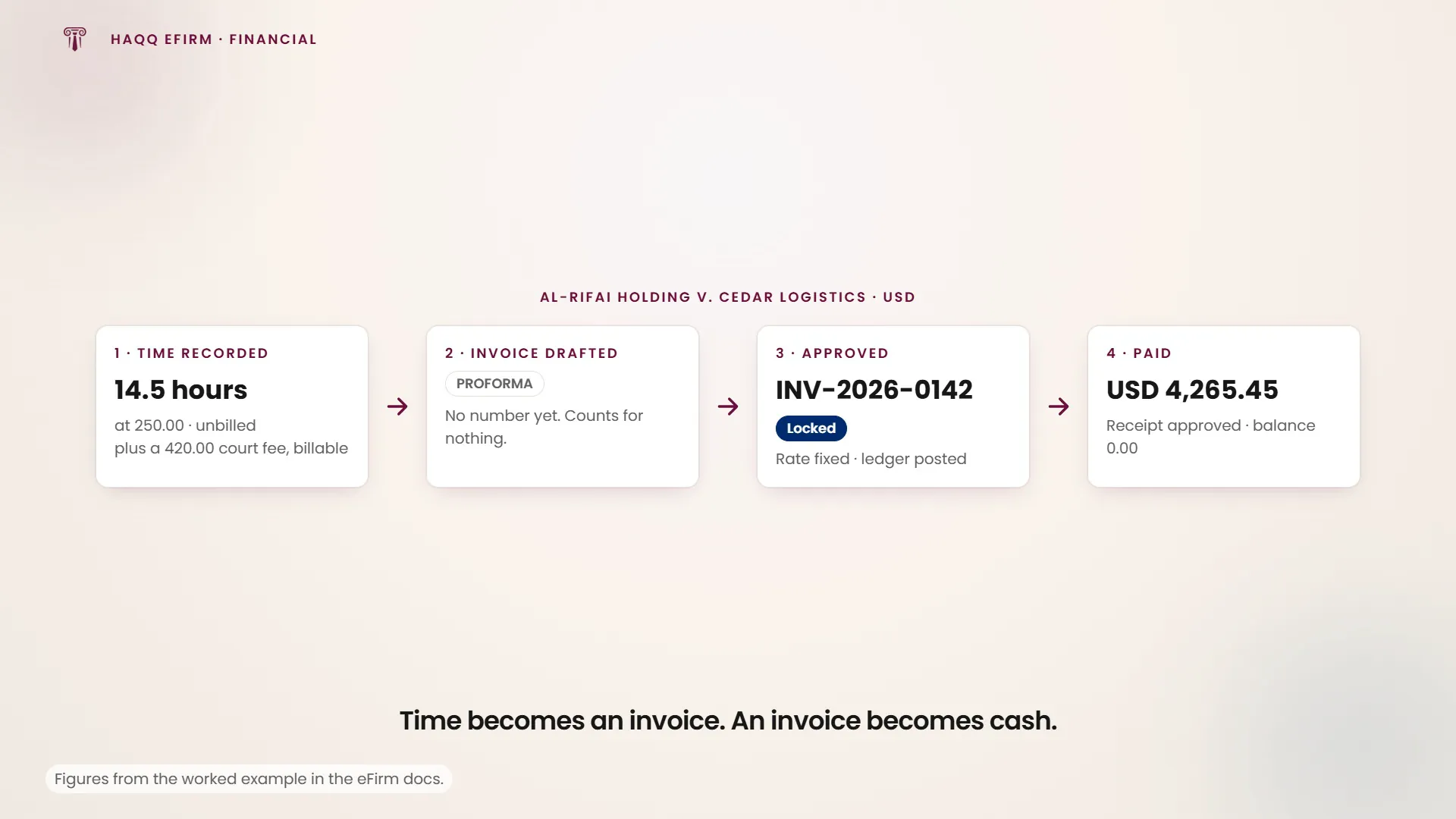
- Un avocat înregistrează timpul pe un dosar. Acesta se află într-un fond de muncă nefacturată.
- Cineva emite o factură și trage acel timp pe ea ca articole cu preț, sau tastează articole manual, sau adaugă cheltuieli pe care cabinetul le-a plătit în numele clientului. Cât timp este editată, factura este un ciornă: nu are număr, tipărește cuvântul „Proforma” acolo unde va fi numărul și nu contează nicăieri. Nu într-un raport, nu în registre, nu în ceea ce datorează clientul.
- Cineva o aprobă. Aceasta este articulația întregului modul.
- Clientul plătește. O chitanță este înregistrată pentru acea factură, limitată la ceea ce este încă restant, și aceasta contează doar după aprobare.
Costurile urmează aceeași formă în direcția opusă: o cheltuială este redactată, aprobată și decontată printr-o plată efectuată. Banii clientului sunt păstrați separat într-un cont fiduciar și retrași în baza unei facturi aprobate odată ce cabinetul i-a câștigat.
Ce face aprobarea
Cinci lucruri se întâmplă simultan și niciunul nu poate fi anulat:
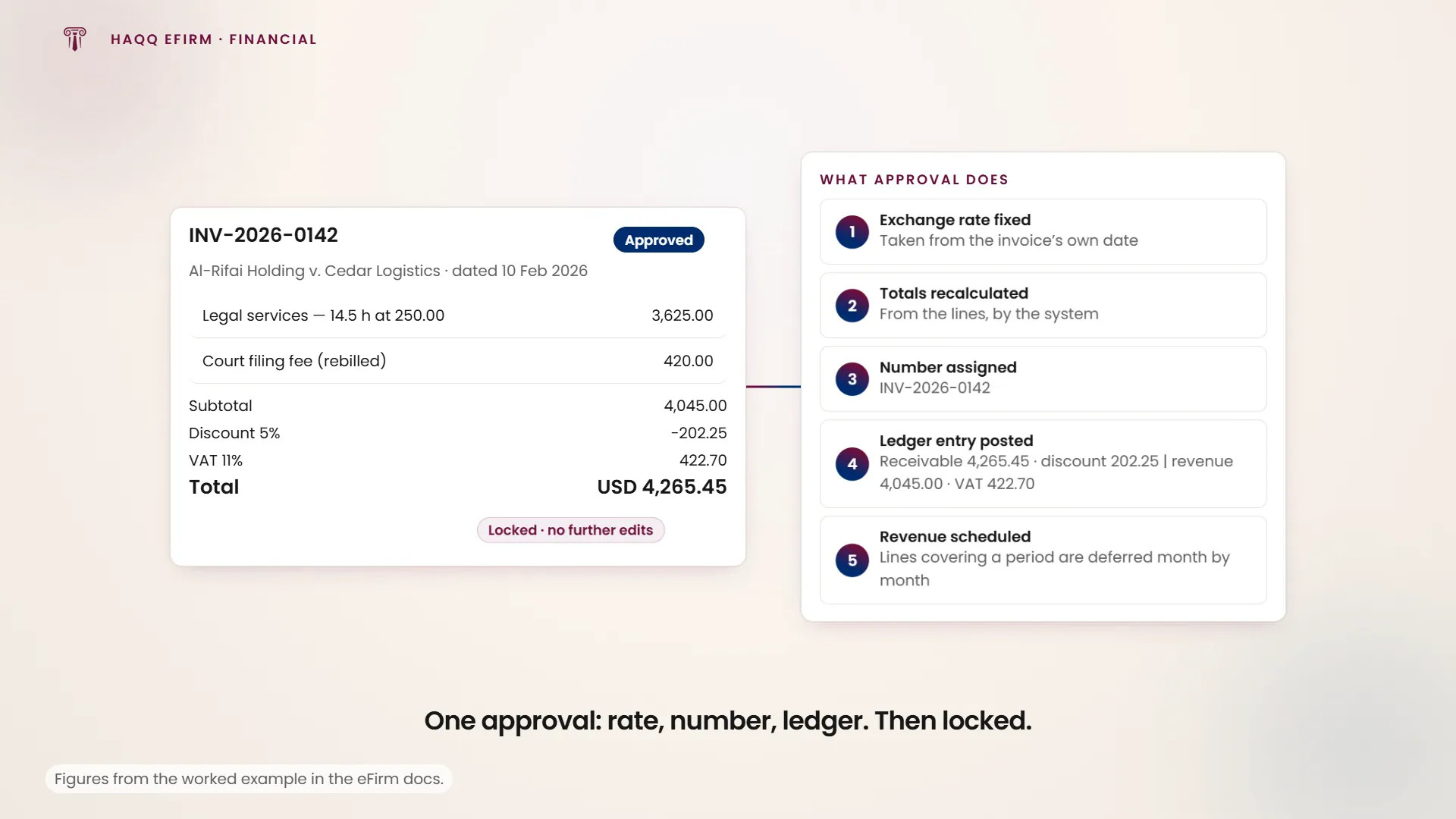
- Rata de schimb este fixată, preluată de la data facturii, nu din ziua aprobării. O factură din decembrie aprobată în ianuarie este măsurată în decembrie.
- Fiecare total este recalculat de sistem pe baza rândurilor. Suprascrie ceea ce era afișat anterior pe ecran.
- Numărul facturii este atribuit, sub un blocaj, astfel încât două persoane care aprobă simultan să nu intre în conflict.
- O înregistrare echilibrată este înscrisă în registrul contabil, cu data facturii.
- Orice rând care acoperă mai mult de o zi inițiază o planificare lunară în loc să contabilizeze imediat venitul.
O factură, ecran cu ecran
Același ciclu de viață ca într-un exemplu practic, pentru a putea vedea pe ce ecran vă aflați și care este înregistrarea în fiecare punct. Cabinetul își ține contabilitatea în USD, dosarul este Al-Rifai Holding v. Cedar Logistics, iar cifrele sunt ilustrative.
| Etapă | Ecran | Starea actuală a înregistrării |
|---|---|---|
| Munca este înregistrată | Foaie de pontaj, și Financiar › Cheltuieli | Nicio factură încă. 14,5 ore la tariful propriu al avocatului care le-a prestat și o taxă judiciară de 420,00 aprobată, marcată facturabilă, se află în grupajul nefacturat. |
| Factura este redactată | Financiar › Facturi › Nou | O ciornă. Link billable aduce orele și cheltuiala ca rânduri tarifate. Se tipărește Proforma acolo unde va sta numărul și nu contează nicăieri. |
| Aprobați și emiteți | Financiar › Facturi | Aprobată și blocată. Acum are un număr, o rată înghețată și o înregistrare contabilă și niciun cuvânt din ea nu mai poate fi editat din nou. |
| Factura ajunge la client | Portalul clientului, sau Print pe factură | Aprobată și blocată. Un client cu acces la portal o deschide singur; altfel, Print generează PDF-ul de trimis. Niciuna nu modifică factura. |
| Banii ajung | Financial › Payments › New | Încă integral neachitată. Chitanța primește număr în momentul creării, dar o plată în așteptare nu reduce nimic. |
| Chitanța este aprobată | Financial › Payments | Plătită. Soldul rămas este zero, iar datoria scadentă se stinge. |
Cum ajunge factura la client. Există două căi și nu se exclud reciproc. Invitați contactul în portalul clientului (acțiunea se află pe fișa de contact, apare după ce contactul are o adresă de e-mail, iar apoi devine o insignă Invited), iar de atunci fiecare factură pe care o emiteți pentru acesta apare pe propria pagină Financial. Sau tipăriți-o dumneavoastră: butonul Print al facturii deschide o fereastră de imprimare și partajare. Listarea este întotdeauna acolo; este imprimarea care depinde de faptul că factura conține o referință de document partajabil, iar fără una, opțiunea de imprimare nu este oferită în niciuna dintre părți.
Observați unde apar numerele. O factură nu are număr până când nu este aprobată, astfel că o ciornă abandonată nu întrerupe niciodată secvența cabinetului. O chitanță primește număr la creare, la fel și o înregistrare contabilă, așadar acestea două lasă goluri.
| Linie | Sumă |
|---|---|
| Timp, 14.5 h la 250.00 | 3,625.00 |
| Taxă de depunere la instanță, refacturată | 420.00 |
| Subtotal | 4,045.00 |
| Reducere, 5% | −202.25 |
| Bază impozabilă | 3,842.75 |
| TVA, 11% | 422.70 |
| Total | 4.265,45 USD |
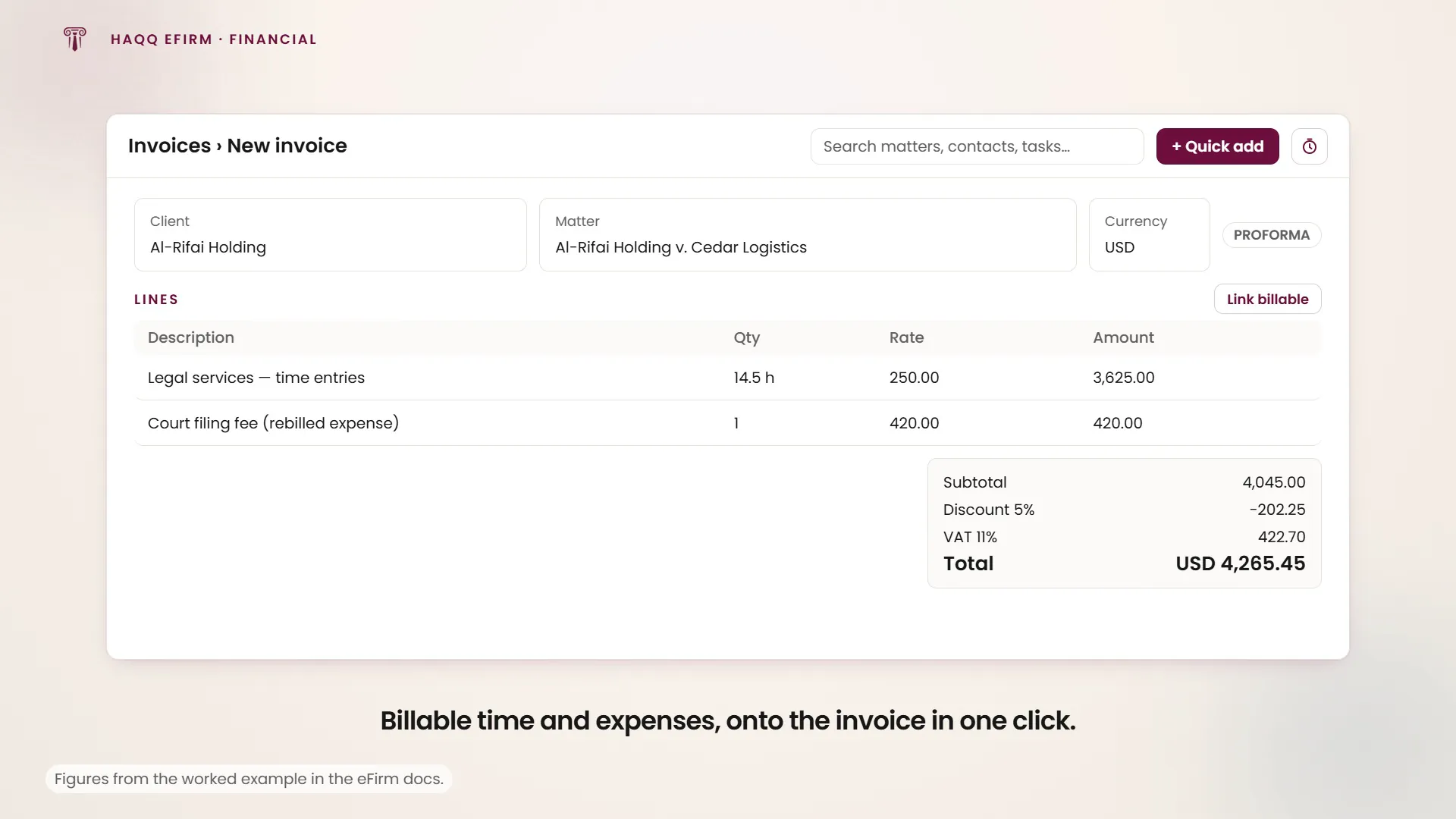
Aceste totaluri sunt o previzualizare live în timp ce editați. Sumele stocate sunt recalculate de sistem la aprobare, astfel încât înregistrarea salvată este întotdeauna cea autoritară, iar aprobarea scrie această înregistrare echilibrată:
| Cont | Debit | Credit |
|---|---|---|
| Creanțe | 4,265.45 | |
| Reduceri | 202.25 | |
| Venituri | 4,045.00 | |
| TVA de plată | 422.70 |
A citi veniturile din acea înregistrare ca fiind 3.842,75, pentru că aceasta este suma facturată clientului, este greșeala pe care o induce creditul brut. Veniturile sunt de 4.045,00, iar reducerea este un cost al muncii în valoare de 4.045,00 vândută la un preț mai mic.
Aprobarea încasării la ultima etapă închide factura și mută rapoartele, dar nu pe toate. Vechimea se șterge, iar Rata de încasare înregistrează numerarul. Veniturile și decontul de TVA nu se mută deloc, deoarece ambele au fost recunoscute încă de la aprobare. Acest decalaj dintre veniturile realizate și numerarul încasat este ceea ce raportul Venituri și numerar există pentru a arăta.
Ce se înregistrează în registru
Întregul comportament de înregistrare într-un singur tabel. Totul este în moneda proprie a documentului și la data proprie a documentului, niciodată la data clicului.
| Eveniment | Debit | Credit |
|---|---|---|
| Factură salvată ca ciornă | Nimic. Liniile de lucru sunt eliminate la aprobare. | |
| Factură aprobată, linie normală | Reduceri, la valoarea reducerii acordate | Venituri, la valoarea brută a liniei |
| Factură aprobată, linie aferentă unei perioade | Venituri amânate | |
| Factură aprobată, taxă | Datorii fiscale | |
| Factură aprobată, înregistrare de închidere | Creanțe, la totalul facturii | |
| Plată primită | Bancă | Creanțe |
| Cheltuială aprobată | Cont de cheltuieli, plus taxa recuperabilă | Datorii, la totalul cheltuielii |
| Plată efectuată | Datorii | Bancă |
| Depozit fiduciar | Activ fiduciar client | Datorie fiduciară client |
| Regularizare fonduri clienți | Datoria din trust față de client, plus fluxurile de plată | Activ fiduciar client |
| Recunoașterea lunară a veniturilor | Venituri amânate | Venituri |
| Înregistrare manuală în jurnal | Exact liniile introduse de contabil | |
| Orice anulat | Nimic nu se postează. Liniile originale sunt marcate ca anulate acolo unde se află. |
Veniturile sunt creditate brut. Reducerea este un debit separat, nu o diminuare a creditului. Citirea veniturilor direct din registru, fără compensarea contului de reduceri, le va supraevalua.
Exemplu concret: o factură, de la început până la sfârșit
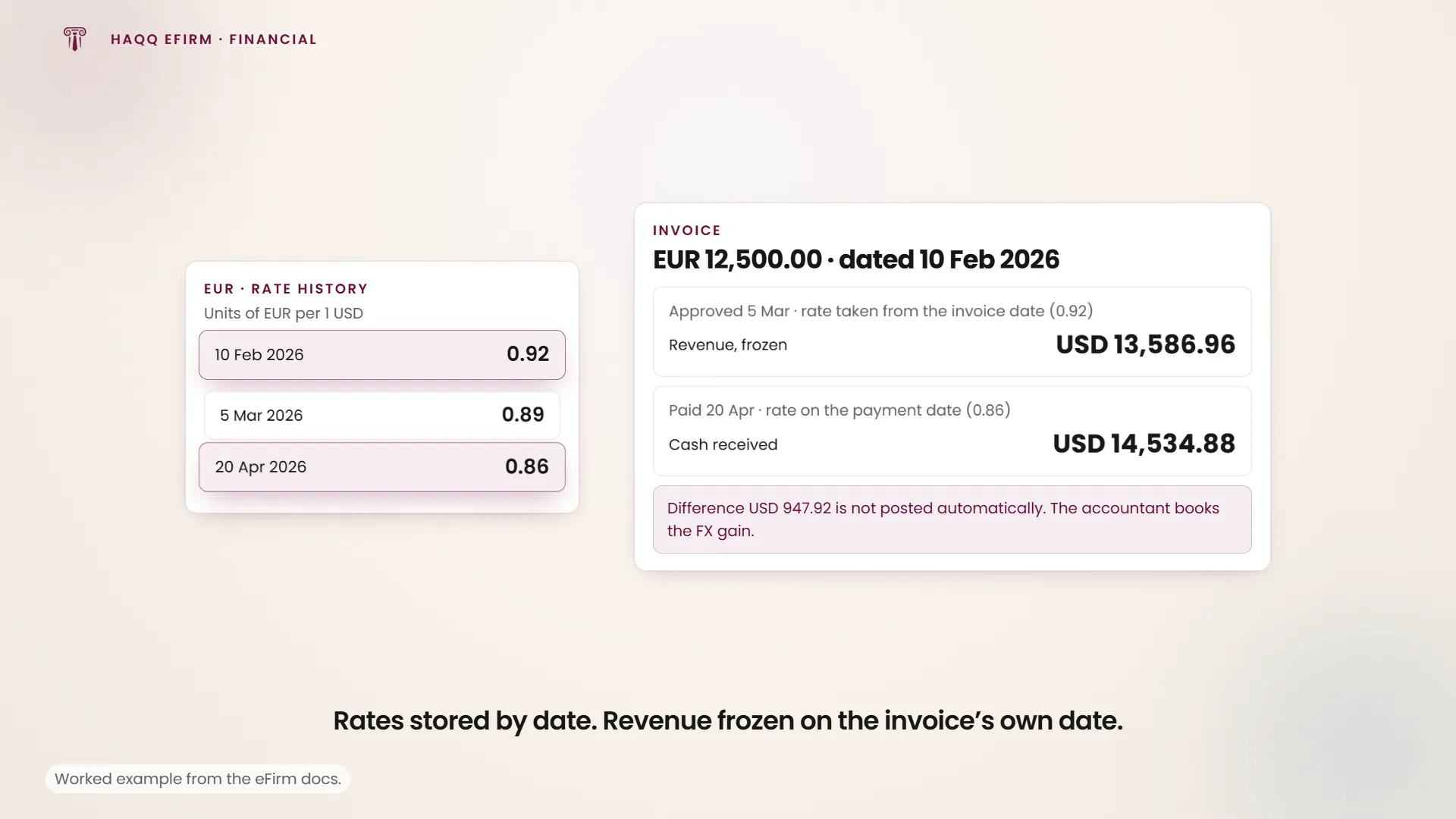
Cabinetul ține contabilitatea în USD și facturează un client 12.500,00 EUR, cu data de 10 februarie 2026. Cursul valutar înregistrat al euro la acea dată este 0,92. Factura este redactată pe 12 februarie și aprobată pe 5 martie.
La aprobare, cursul este preluat din 10 februarie, nu 5 martie, astfel încât 0,92 se fixează permanent. În evidențele cabinetului, factura valorează 12.500 ÷ 0,92 = 13.586,96 USD, iar această sumă nu se mai modifică niciodată.
Clientul plătește integral pe 20 aprilie, dată la care euro a ajuns la 0,86. Plata este evaluată la cursul din 20 aprilie, astfel încât cabinetul a încasat 12.500 ÷ 0,86 = 14.534,88 USD. Cabinetul a colectat cu 947,92 USD mai mult decât a înregistrat.
Invoices
Trei stări, deduse din două elemente: dacă a fost aprobată și dacă a fost anulată. Nu există stare „trimisă”, „emisă” sau „plătită”.
La o ciornă puteți face orice: introduceți timpul și cheltuielile nefacturate, adăugați linii manual, aplicați o reducere pe linie și una pe întreaga factură, adăugați TVA, atașați fișiere, ștergeți. La o factură aprobată puteți înregistra o plată, anula, duplica sau tipări.
Numerele rulează într-o singură secvență pe cabinet și nu se reîntorc niciodată în grupul de numere disponibile, astfel încât golurile sunt normale și așteptate. Anularea este definitivă și nu poate fi revocată niciodată, iar plățile deja încasate pe factură rămân neatinse.
Ce poate deveni o linie de factură
Doar trei lucruri: o înregistrare de timp, o cheltuială sau un pas de etapă al dosarului. Sarcinile au un indicator facturabil și o rată orară, dar nu pot fi facturate, astfel încât marcarea sarcinilor ca facturabile înregistrează date pe care partea de facturare nu le poate vedea.
O oră este tarifată dintr-un singur loc: tariful din fișa de personal a timekeeper-ului, copiat pe înregistrare la prima introducere. Nu există tarif pe dosar, tarif client, grilă de tarife sau tarif implicit al cabinetului, iar modificarea ulterioară a tarifului cuiva nu reface munca deja înregistrată.
Cele două laturi ale noțiunii „deja facturat” diferă. O înregistrare de timp este un indicator binar (da/nu), astfel încât o linie de factură consumă întreaga înregistrare, indiferent de suma facturată. O cheltuială este măsurată în bani și rămâne facturabilă până când liniile aferente ating totalul său, astfel încât poate fi facturată parțial pe mai multe facturi.
Recunoașterea veniturilor
Când perioada de serviciu a unei linii se întinde pe mai mult de o zi, aprobarea înregistrează suma în venituri amânate și construiește un program care o eliberează lună de lună. O rulare nocturnă înregistrează fiecare lună pe măsură ce devine scadentă.
Divizarea se face pe zile, nu pe număr de luni, și nu rotunjește fiecare lună în mod independent. Menține un total cumulat, îl rotunjește, iar fiecare lună reprezintă diferența dintre totalurile cumulate rotunjite succesive, astfel încât părțile se adună întotdeauna la întreg.
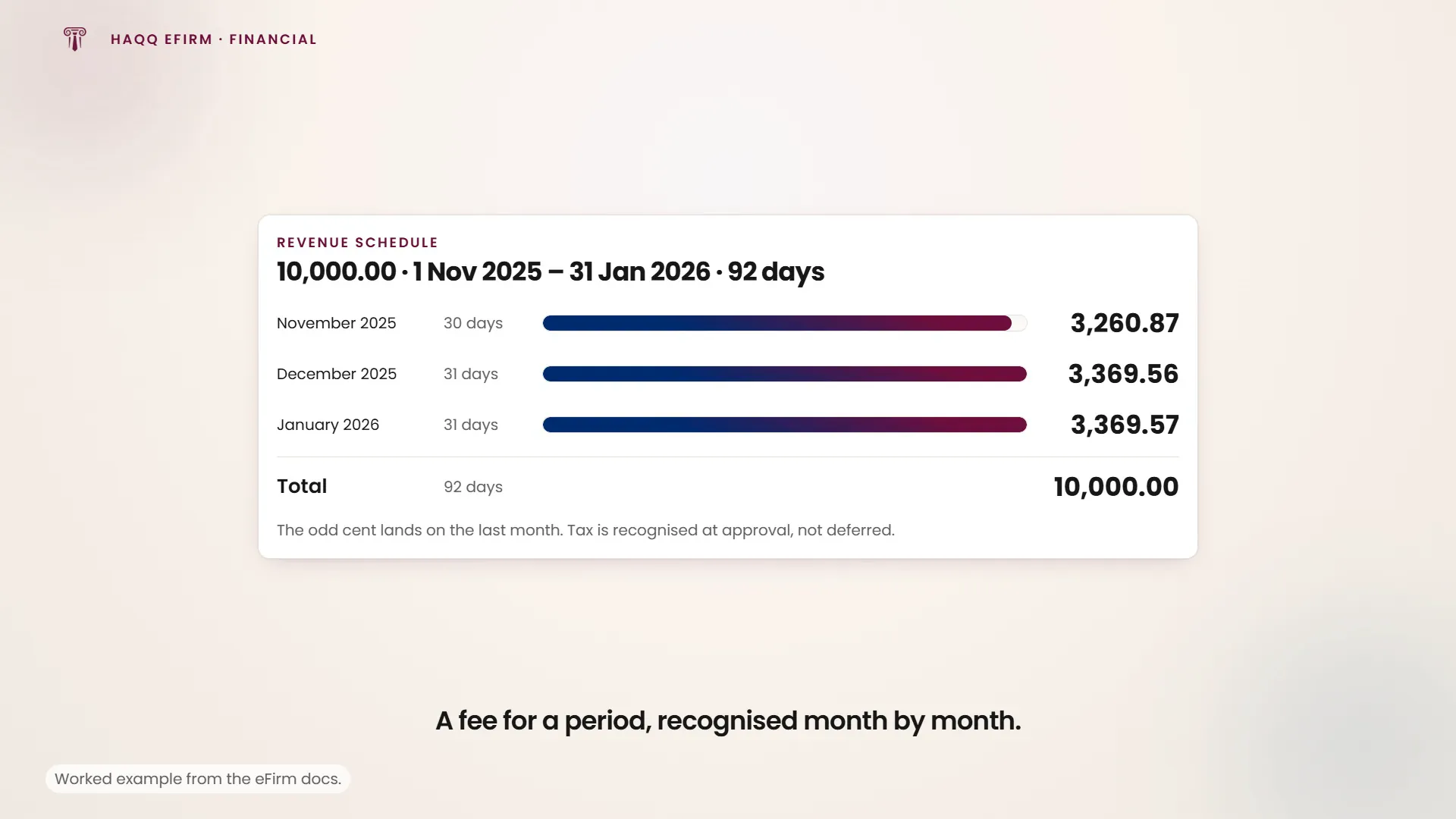
| Lună | Zile | Total cumulat | Înregistrat în luna respectivă |
|---|---|---|---|
| Noiembrie 2025 | 30 | 3,260.87 | 3,260.87 |
| Decembrie 2025 | 31 | 6,630.43 | 3,369.56 |
| Ianuarie 2026 | 31 | 10,000.00 | 3,369.57 |
| Total | 92 | 10,000.00 |
Centul rămas ajunge în ultima lună, prin construcție. Impozitul nu este amânat: întregul impozit a fost recunoscut la aprobarea facturii.
Expenses
O cheltuială înregistrează banii pe care cabinetul îi datorează sau i-a plătit. Fiecare are linii de cost care indică contul de cost afectat și cât impozit recuperabil conține. Aprobarea înregistrează costul și impozitul aferent pe o parte și o datorie către furnizor pe cealaltă.
Impozitul este tratat ca recuperabil: contul de cost preia valoarea netă, impozitul merge într-un activ de impozit recuperabil, iar furnizorului i se datorează valoarea brută.
Atașați factura furnizorului înainte de a aproba. O cheltuială aprobată este blocată complet, inclusiv atașamentele. Fluxul de lucru „aprobați costul acum, atașați documentele când sosesc” nu este posibil, așa că atașați mai întâi.
Plăți și încasări
Trei stări: în așteptare, aprobat, anulat. O plată în așteptare nu reduce nimic, astfel încât, până când cineva o aprobă, factura apare în continuare ca integral neachitată.
Ecranul se deschide într-unul dintre cele patru moduri, iar modul respectiv determină ce poate face încasarea.
| Mod | Ce înregistrează |
|---|---|
| În bloc | Cazul obișnuit: bani primiți pentru o factură sau bani achitați pentru o cheltuială. O singură plată pe document. |
| Compensare | Reglează atât suma pe care clientul o datorează cabinetului, cât și suma pe care cabinetul o datorează clientului, într-o singură mișcare, în loc de două transferuri. Este relevant doar când clientul este și furnizor. |
| Alimentare cont fiduciar | Intrare de bani ai clientului în contul său fiduciar. Nu se leagă de nicio factură. |
| Regularizare fonduri clienți | Retrage din soldul fiduciar al clientului pentru o factură aprobată. Sunt oferiți doar clienții care au un cont fiduciar și doar facturi. Se respinge dacă ar rezulta un sold negativ. |
- Fiecare plată obișnuită menționează exact o factură sau o notă de plată, limitată la soldul său restant.
- Nu există plăți în avans sau credite nealocate. Singura modalitate de a păstra banii clientului neaplicați încă unui document este depozitul fiduciar.
- Nu există rambursări. Sumele trebuie să fie pozitive, așadar o chitanță nu poate fi niciodată negativă. Singura anulare posibilă este anularea integrală a plății inițiale.
- Documentul pe care îl reglează o plată este stabilit la momentul creării acesteia. Redirecționarea plății presupune anularea acesteia și înregistrarea unei plăți noi.
Fila În bloc creează plăți separate. Arată ca un ecran de alocare, dar nu este unul. Un client care achită șase facturi printr-un singur transfer bancar generează șase numere de chitanță, iar nimic nu le leagă între ele.
Conturi de avans pentru cheltuieli per utilizator
Separat de fondurile fiduciare ale clienților, un cabinet poate finanța în avans cheltuielile proprii ale unui avocat. Creați un cont numerotat pentru acea persoană în planul de conturi, alimentați-l printr-o înregistrare contabilă care transferă o sumă fixă în contul respectiv la o dată dată, iar avocatul cheltuie din sold pe măsură ce cheltuielile sunt înregistrate pe contul său. Când soldul scade, reîncărcați-l cu o altă înregistrare contabilă. Planul de conturi din spatele acestei funcționalități este cel propriu al cabinetului. Poate fi reconstruit în întregime, cont cu cont, pentru a reflecta modul în care cabinetul urmărește deja persoanele și banii.
Fondurile clienților deținute în cont
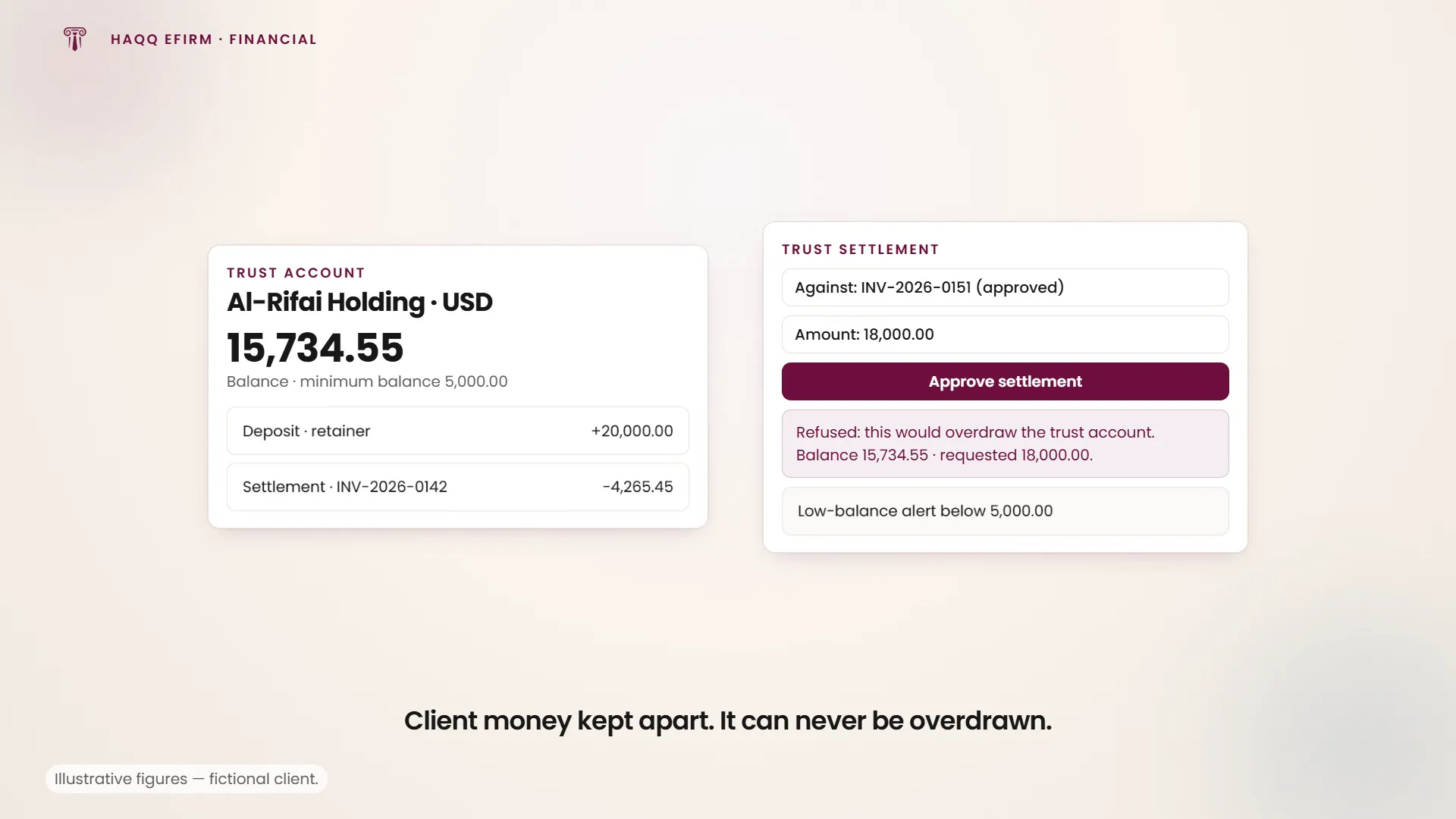
Un cont fiduciar este un depozit nominal al banilor proprii ai clientului pe care cabinetul îi deține: un onorariu avans, fonduri avansate pentru taxe judiciare, sume rezultate din tranzacții nedecontate încă. Este ținut separat pentru că nu a aparținut niciodată cabinetului. Fiecare cont aparține unui singur client, într-o singură monedă, având în spate două registre oglindă: ce deține cabinetul și ce datorează acelui client.
Există două mișcări: o depunere (intrare) și o decontare (ieșire) pentru o factură aprobată. Formularul de decontare listează doar clienții care au un cont fiduciar și doar facturile acestora. La aprobarea unei decontări, registrul fiduciar al clientului se blochează, se citește soldul sub blocaj și se respinge operațiunea dacă ar rezulta un sold negativ.
Un cont fiduciar are și o alertă de sold scăzut: setați pragul o singură dată în Setări, iar cabinetul este notificat atunci când soldul fiduciar al clientului scade sub acesta, în loc să aflați doar când o retragere este refuzată.
TVA și taxe
Taxele percepute clienților pentru onorarii și plătite furnizorilor pentru costuri sunt capturate pe măsură ce documentele sunt introduse, păstrate în conturi de taxe dedicate și raportate pentru orice interval de date ca sume percepute, sume plătite și diferența.
- Momentul exigibilității taxei este data proprie a documentului, indiferent de momentul aprobării.
- Baza este strict de angajamente. Datele de plată nu afectează niciodată un cont de taxe, astfel încât un cabinet care utilizează contabilitatea de casă nu poate genera declarația aici.
- Nu există prețuri cu taxa inclusă. Fiecare preț introdus este net, iar taxa se adaugă peste, astfel încât un cabinet care convine un onorariu brut trebuie să extragă taxa manual.
- Nu există cotă zero și nici scutire de taxă. Ambele sunt introduse ca 0%, ceea ce nu înregistrează nicio linie de taxă, astfel încât declarația nu poate distinge o vânzare cu cotă zero de una neimpozabilă.
Modulul se oprește la raport. Nimic nu depune o declarație și nu blochează o perioadă după depunere.
Regulile care vă vor opri
Fiecare dintre acestea refuză salvarea sau blochează aprobarea.
Salvare
- O factură necesită o monedă, un profil de facturare și un șablon tipărit.
- Totalul unei facturi trebuie să fie mai mare decât zero, astfel încât o reducere de 100% nu poate fi salvată. Anularea completă a unei sume până la zero trebuie făcută într-un alt mod.
- O reducere fixă nu poate depăși suma la care se aplică. Un procent trebuie să fie între 0 și 100.
- O perioadă de serviciu nu se poate încheia înainte de a începe.
- Fiecare linie de cheltuială trebuie să indice un cont de costuri și un cont de taxă recuperabilă.
- Debiturile unei înregistrări contabile trebuie să fie egale cu creditele sale în limita unui cent, iar acolo unde liniile au perioade de serviciu diferite, fiecare perioadă trebuie să fie echilibrată independent.
- Dacă nu puteți deschide un dosar, nu puteți înregistra o cheltuială pe el. Un import dintr-o foaie de calcul pune aceeași întrebare.
Aprobare
- Un document nu poate fi aprobat dacă moneda sa nu are un curs înregistrat la data documentului. Refuzul menționează moneda și data. Nu se recurge niciodată la cursul zilei curente.
- Fiecare cont de care are nevoie înregistrarea trebuie să existe mai întâi, iar orice reducere necesită un cont de reduceri desemnat.
- Înregistrarea trebuie să se echilibreze cu totalul documentului, în limita unui cent.
- O decontare fiduciară nu poate depăși soldul clientului. Refuzul indică ambele sume.
- Dacă documentul este supraplătit după recalcularea plăților, întreaga aprobare se anulează. Astfel sunt detectate două plăți în așteptare care, individual, s-ar fi încadrat.
Rapoarte financiare
Șaisprezece rapoarte, toate citind același registru. Fiecare este guvernat de două fapte.
Numai documentele aprobate contează. O ciornă de factură, o cheltuială neaprobată sau o plată în așteptare nu apar în nicio cifră. Registrul general este singura excepție: acesta listează și ciornele și liniile anulate, astfel încât pista de audit este completă.
O cifră se încadrează în perioada datei documentului propriu-zis, nu a datei la care a fost aprobat. O factură din 31 decembrie aprobată pe 15 ianuarie constituie venit din decembrie.
Cinci rapoarte se bazează, în schimb, pe data aprobării. Collection Rate, Ranking, Revenue & Cash, Realization Rate și aged-debt snapshot folosesc data aprobării, astfel încât aceeași factură poate fi încadrată în luni diferite în rapoarte diferite. Aceasta este sursa celor mai multe discrepanțe între rapoarte.
| Raport | Întrebarea la care răspunde |
|---|---|
| Bilanț | Ce deține cabinetul, ce datorează și care este valoarea sa la o anumită dată? |
| Contul de profit și pierdere | Ce profit a realizat cabinetul în această perioadă? |
| Flux de numerar | De unde provine numerarul, unde se duce și corespunde cu soldul bancar? Raportul reconciliază numerarul de deschidere cu cel de închidere, cu dobânzile, dividendele și impozitele pe linii separate. |
| Registru general | Fiecare rând individual, cu documentul care stă la baza acestuia. |
| Balans de verificare | Debitul și creditul fiecărui cont corespund și ce s-a modificat? |
| Vechimea soldurilor | Din tot ce este neplătit acum, cât este restant și de cât timp? |
| Câștig/(Pierdere) valutar nerealizat | Dacă toate soldurile în valută deschise s-ar deconta la cursul de astăzi, cabinetul ar câștiga sau ar pierde? Doar informativ. Nu se efectuează nicio înregistrare. |
| Extras de cont | Pentru acest client: ce sume datora, ce s-a modificat și care este situația actuală? |
| Rentabilitatea clienților | După discounturi și costurile înregistrate, care clienți au adus profit? |
| Clasament | Care sunt cei mai mari clienți, furnizori, dosare și avocați facturanți? |
| Rata de încasare | Din onorariile facturate, cât s-a încasat și cât de repede? |
| Rata de realizare | Cât din valoarea înregistrată a fost efectiv facturată și încasată? |
| Venituri și numerar | Plătesc efectiv clienții de la care am recunoscut venituri? |
| Declarație de TVA | Ce TVA am colectat, ce TVA am dedus și care este diferența? |
| TimeKeeper | Ce a înregistrat fiecare persoană? |
| Rata de utilizare | Cât din capacitatea programată a fiecărei persoane a fost folosită pentru muncă facturabilă? |
Interpretarea corectă a raportului de vechime
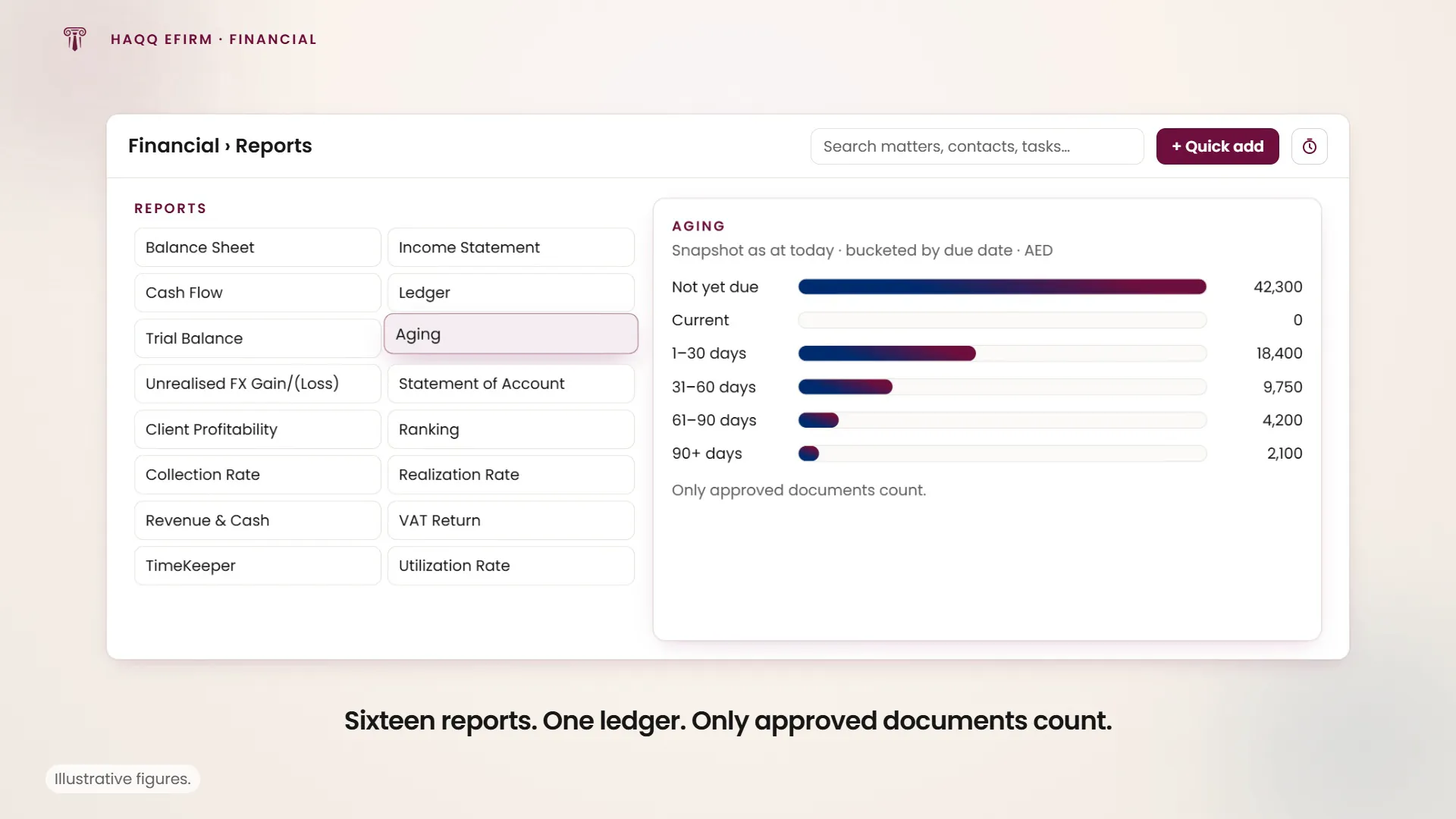
Este o imagine instantanee la data de astăzi, fără interval de date, astfel încât nu puteți întreba cum arătau datoriile cu vechime la 31 decembrie. Fiecare document neachitat este plasat într-un interval de vechime, calculând numărul de zile dintre astăzi și data scadentă, niciodată data facturii, iar ambele capete ale fiecărui interval sunt incluse.
„Curent” înseamnă scadent exact astăzi. Este un interval de o zi, nu „în termen”. Tot ce nu este încă scadent se află în „Nescadent încă”, astfel încât, în majoritatea zilelor, coloana Curent este goală. În cazul în care un document nu are dată scadentă, raportul presupune data aprobării plus 30 de zile, ceea ce înseamnă că un cabinet care nu stabilește termene de plată va obține un profil de vechime complet populat și integral presupus.
Interpretarea corectă a utilizării
Începând cu versiunea 4.4.0, numitorul este capacitatea programată a fiecărei persoane, adică orele în care programul de lucru spune că este disponibilă, nu doar orele înregistrate. Înainte, numitorul era totalul orelor pe care persoana le înregistra în pontaj, astfel încât trei ore facturabile și nimic altceva se citeau ca 100% utilizare. Cifrele pentru perioadele consultate înainte de schimbare nu vor corespunde cu ceea ce raportul afișează acum pentru ele.
Rata de realizare măsoară realizarea totală în raport cu valoarea standard, nu față de ceea ce s-a facturat: numerarul încasat împărțit la muncă la prețul de listă, astfel încât combină reducerea de valoare și deficitul de colectare într-un singur număr.
Coloane care au același nume și nu arată același număr
| Coloană | Pe un raport | Pe altul |
|---|---|---|
| Profit brut | Rentabilitatea clientului: venituri recunoscute nete de discounturi, minus cheltuieli recunoscute, datate pe perioada de serviciu | Clasament: venituri facturate fără deducerea discounturilor, minus cheltuieli facturate, datate după aprobare |
| Rata de colectare | Rata de colectare: numerarul încasat raportat la veniturile facturate, plafonat la 100% | Venituri și numerar: numerarul raportat la veniturile recunoscute, fără plafon, astfel încât un onorariu amânat plătit în avans poate depăși 100% |
| Creanțe restante | Vechime: întregul registru, tot ce este neplătit | Clasament: doar facturile aprobate în fereastra aleasă |
Toate cele trei perechi sunt corecte intern și nu se vor reconcilia niciodată între ele.
Multivalută
Cabinetul își ține contabilitatea într-o singură monedă, dar facturează, plătește și deține numerar în altele. Totul decurge dintr-o singură idee: un curs valutar este o serie datată, nu o valoare unică.
Un curs înregistrează câte unități din moneda străină primiți pentru o unitate din moneda cabinetului. Dacă evidențele sunt în dolari și cursul euro este 0,92, un dolar cumpără 0,92 euro. Așadar: conversia din valută în moneda dumneavoastră, se împarte. Conversia din moneda dumneavoastră în valută, se înmulțește. Între două valute, se fac ambele.
Fiecare curs poartă o dată și se aplică din acea zi până când un curs cu o dată ulterioară îl înlocuiește. Nu există expirare și nici alimentare automată, iar istoricul este doar în modul adăugare. Corectarea unei valori greșite presupune reînregistrarea pentru aceeași zi; cronologia păstrează valoarea veche, marcată ca înlocuită, și marchează un curs ca blocat de îndată ce un document aprobat depinde de el. O ciornă a cărei monedă nu are curs pentru data sa afișează o avertizare, astfel încât puteți înregistra cursul înainte de a încerca aprobarea.
Cursurile se înregistrează în Setări › Financiar › Monede, câte o cronologie pentru fiecare monedă. Deoarece nimic nu le preia, cineva din cabinet trebuie să le mențină actualizate, iar o aprobare va fi refuzată în momentul în care lipsește un curs pentru data documentului respectiv.
| Cifră | Curs utilizat | Blocat? |
|---|---|---|
| O factură, o cheltuială, o plată sau o înregistrare în jurnal | Data proprie a documentului | Fixat la aprobare |
| Venitul de pe o factură | Cursul blocat al facturii | Blocat |
| Ce este încă restant pe ea | Cursul zilei | Se modifică de fiecare dată când vă uitați |
| Ceea ce a fost plătit pe aceasta | Cursul înghețat al fiecărei plăți | Înghețat, pe plată |
| Balanță de verificare, bilanț, cont de profit și pierdere | Fiecare rând la cursul înghețat al documentului său | Blocat |
| Ecranul planului de conturi | Cursul zilei | Live |
Două valori pe o factură, măsurate în două moduri. Venitul unei facturi este înghețat, iar soldul restant este live. Odată ce cursul se schimbă, acestea nu vor mai corespunde și nimic de pe ecran nu explică de ce. Același mecanism face ca planul de conturi și balanța de verificare să arate totaluri diferite pentru același cont: unul răspunde la „cât valorează acum?”, iar celălalt la „cât valora atunci când s-a întâmplat”.
Configurarea și planul de conturi
Un cabinet activează modulul o singură dată, printr-un asistent de configurare pas cu pas pe care îl puteți parcurge în ritmul dumneavoastră (a înlocuit în versiunea 4.4.0 o singură fereastră de configurare), și alege un plan de conturi inițial: unul standard, cu 115 conturi, sau unul complet, cu 695. Alegerea nu poate fi repetată sau anulată. Același act creează și prima monedă a cabinetului, care este întotdeauna dolari americani, indiferent de locație, astfel încât un cabinet din Beirut sau Dubai o modifică ulterior printr-un flux controlat.
Conturile sunt aranjate într-o structură arborescentă sub șapte categorii fixe de nivel superior: active, datorii, capitaluri proprii, venituri, contra-venituri, cheltuieli și altele. Un cont care a avut cel puțin o înregistrare nu poate fi șters și niciunul dintre părinții săi nu poate fi șters. Se iau în calcul toate rândurile scrise vreodată, inclusiv ciornele șterse ulterior și rândurile anulate ulterior.
O notă contabilă primește numărul de referință în momentul creării, așadar o notă contabilă redactată și neaprobată ocupă totuși un număr și lasă un gol. Facturile se comportă invers, neprimind niciun număr până la aprobare.
Șabloane și tipărire
Șabloanele controlează aspectul facturii tipărite: o machetă de tip drag-and-drop cu antet, detalii despre client, tabelul cu elementele facturate și totalurile.
Editarea unui șablon modifică modul în care se retipăresc facturile anterioare. Nu există o captură a machetei așa cum a fost emisă, așadar editarea unui șablon are efect retroactiv asupra tuturor facturilor care îl utilizează. Duplicați șablonul și editați copia atunci când doriți un aspect nou.
Roluri și acces
Accesul se acordă unei persoane, nu unei funcții. Un rol este un pachet cu nume de permisiuni pe care cabinetul îl creează, o persoană poate deține mai multe roluri, iar ceea ce poate face este tot ce permit rolurile sale, însumat. Fiecare permisiune combină tipul de înregistrare, acțiunea și domeniul de acces.
Domeniul de acces implicit este „totul”. Dacă se creează o permisiune și nimeni nu specifică altceva, aceasta acoperă fiecare înregistrare de acel tip. Restricționarea accesului trebuie stabilită în mod deliberat. Cine a creat o înregistrare poate acționa întotdeauna asupra ei, indiferent de rol, astfel încât o persoană cu drepturi doar de vizualizare poate totuși edita și șterge tot ce a introdus personal.
Rapoartele sunt de tip totul-sau-nimic și la nivelul întregului cabinet. Odată ce o persoană poate deschide rapoarte, fiecare raport afișează cifrele întregului cabinet și nicio restrângere la nivel de înregistrare care se aplică facturilor nu se aplică rapoartelor.
Detaliile complete se găsesc în Roluri și permisiuni.
Lucruri care par lipsă, dar nu sunt
Fiecare dintre acestea este o decizie deja luată, nu o omisiune, și fiecare este întrebată în prima lună de utilizare a modulului de către un cabinet.
| „Unde este…” | Răspunsul |
|---|---|
| ecranul Tranzacții? | Eliminat din meniu în mod deliberat. Lista de înregistrări pe care oamenii o doresc de fapt este Rapoarte › Registru, care afișează aceleași date cu contul și documentul sursă atașate. |
| șabloanele de facturi și chitanțe? Obișnuiau să fie sub Financiar. | Setări › Financiar, deoarece un șablon este o configurație, nu o înregistrare de registru. Adresele vechi redirecționează permanent, așa că marcajele existente încă funcționează. |
| gestionarea valutelor? | Setări › Financiar › Valute, cu un ecran pentru fiecare valută care afișează istoricul complet datat al cursurilor sale. În Setări din același motiv ca șabloanele. |
| orice raportare FX? | Câștig/(Pierdere) valutar(ă) nerealizat(ă), în lista de rapoarte. Este în mod deliberat un raport la un moment dat și doar pentru informare: evaluează soldurile deschise în valută la cursul zilei și nu înregistrează nicio înregistrare proprie. |
| Bugete? | Retras. A fost eliminat din produs în versiunea 4.3.0 la 18 august 2026 și nu mai este disponibil. |
| un extras de cont al clientului sau soldul trustului în portalul pentru clienți? | Nu acolo, dar portalul este. Un client invitat în portal își vede propriile facturi, doar în citire, cu un PDF de descărcat. Ceea ce nu conține este un extras de cont, un sold al trustului sau orice din registru: sfera de aplicare orientată către client a modulului Financiar se referă la facturi și nimic altceva. |
| de ce foaia de pontaj se află într-un meniu de ecrane financiare? | Este o scurtătură, nu o pagină financiară. Se află la /firm/time-sheet și este păstrată la sfârșitul grupului deoarece orele facturabile sunt punctul de unde pornesc facturile. |
Trei adrese din aplicația retrasă încă se rezolvă: formele la singular /financial/invoice/, /financial/expense/ și /financial/payment/ redirecționează către echivalentele lor actuale. Orice altceva din acea eră este menit să returneze un 404, mai degrabă decât să ghicească ce ați dorit.
Glosar
| Termen | Ce înseamnă aici |
|---|---|
| Proformă | Ceea ce imprimă o factură provizorie acolo unde va apărea numărul său. Nu contează pentru nimic. |
| Aprobare | Actul care transformă un document în bani: fixează rata, atribuie numărul, înregistrează articolul contabil, blochează înregistrarea. |
| Venituri amânate | Bani facturați pentru o perioadă încă nelivrată, deblocați lunar. |
| Taxă recuperabilă | Taxa plătită unui furnizor pe care cabinetul se așteaptă să o recupereze, menținută ca activ, nu ca cheltuială. |
| Cont fiduciar | Un fond din banii proprii ai unui client pe care cabinetul îl deține, din care se retrage doar în baza unei facturi aprobate. |
| Valoare standard | Orele înregistrate la prețul de listă, înainte de orice reducere. Numitorul realizării globale. |
| Rată înghețată | Cursul valutar aplicat unui document la aprobare, care nu se mai recalculează niciodată. |
Următorii pași
Timpul înregistrat pe un dosar este baza din care se construiesc majoritatea facturilor, așadar Dosare și Sarcini se află în amonte de tot ce este aici. Contacte cuprinde clienții cărora li se emite o factură, iar Actualizări produs înregistrează ce s-a schimbat în fiecare versiune.